
Dinnington High School recognises it’s moral and statutory responsibilities to safeguard and promote the welfare of our young people. We endeavour to provide an environment where everyone feels safe and is respected and valued. We will be alert to the signs of abuse and neglect and will follow procedures rigorously to ensure effective support, protection and justice is offered to our students.’
At Dinnington High School we fully embrace the principle that the welfare of the child is paramount and that it is the responsibility of all adults (including other commissioned or contracted staff) to safeguard our young people, ensuring that they receive the right help at the right time.
For this to happen, all of us take our role in identifying concerns early, sharing information and taking prompt, informed action very seriously.
Staff work with vigilance towards our shared objectives:
To provide a safe environment for young people to learn, minimise risks of harm and endeavour to keep them safe from abuse and injury.
How do we keep students safe?
- Having up to date and working policy documents
- Check the suitability of all our staff who work with the students
- Encourage students to have a voice and to tell us if something is wrong
- Adhere to health and safety regulations
- Train all our staff how to recognise and respond to child welfare and safeguarding concerns
- Have a Designated Safeguarding Lead (DSL) who leads the Safeguarding and Child Protection Team
- Work in partnership with parents and carers
- Share information with appropriate agencies
Meet the Safeguarding Team
Headteacher – Kerry Wade
Designated Safeguarding Lead – Miss Daley
Safeguarding Officer – Mrs Paling
Assistant Head Teacher (Senco) – Mrs Jackson-Horner
Assistant Head Teacher (Behaviour) – Mr Grenham
Deputy Headteacher – Mr Mazacs
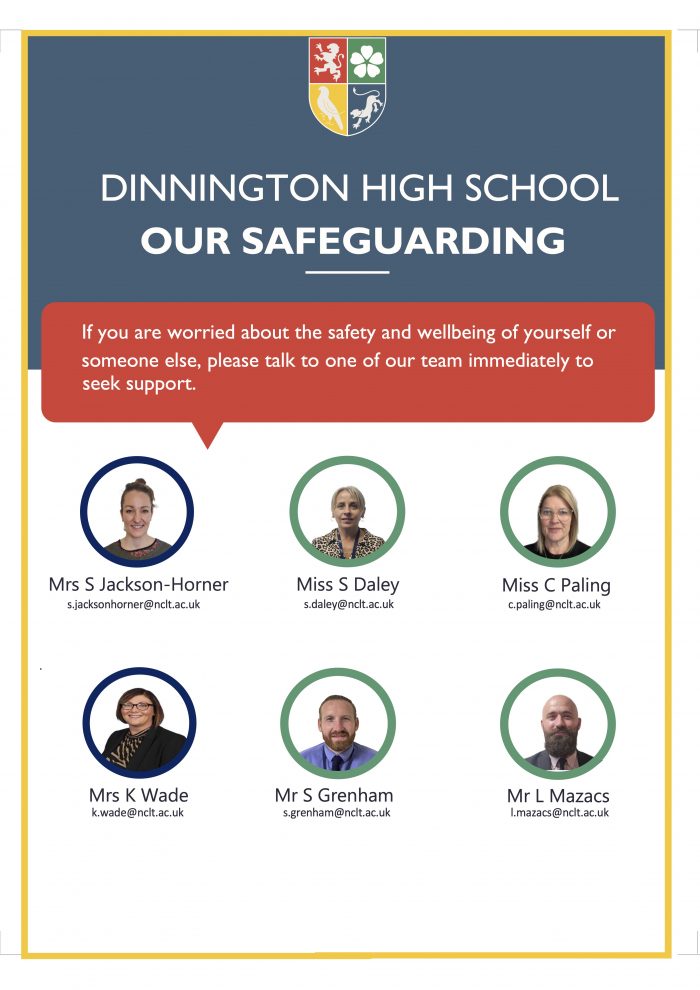
To help you understand the scope of safeguarding, below are categories of safeguarding support (This list is not exhaustive)
- Bullying
- Online Safety
- Mental Health
- Child Exploitation
- Domestic Abuse
- Neglect
- Radicalisation
- Self-harm
- Attendance concerns
- Peer-on-peer abuse
Child abuse – Types & Signs
- Physical
- Emotional
- Sexual
- Neglect
Some signs to look for: (This list is not exhaustive)
- A change in behaviour
- Secrecy around a relationship with a particular person
- Losing interest in self and things around them
- Acquiring money without explanation
*Equally there might also be a perfectly reasonable explanation for a change in a child’s presentation, behaviour and demeanour.
What to do if you are worried about a child
If you notice anything that concerns you, or a child has disclosed any information that worries you, talk to a member of our Safeguarding Team: DIN-Safeguarding@nclt.ac.uk
Worried about a Rotherham Child?
Rotherham Children’s Social Care (MASH) – 01709 336080.
Worried about a Nottinghamshire student (Worksop and surrounding areas)?
Contact – 0300 500 8080
If you believe a child is in immediate danger, please call 999 or report a crime on 101.
Other useful numbers:
NSPCC – 0808 8005000 10am-4pm or email: help@NSPCC.org.uk (24/7)
Childline: 0800 1111